
Find, save, check
Chapter 07 / 18
Where? When?
Finding the place does not give you the date.
Look beyond one building
Similar doors can exist in many towns. Compare the door’s position with the road, stop and corner. Check the date of map images. An old sign may be gone today. A GPS tag can be wrong too.
Keep times separate
Event time is when the event happened. Capture time is when the image was made. Upload time is when it was posted. Collection time is when you saved it. Write the time zone. Keep the original time and add its UTC value beside it.
One record, two questions
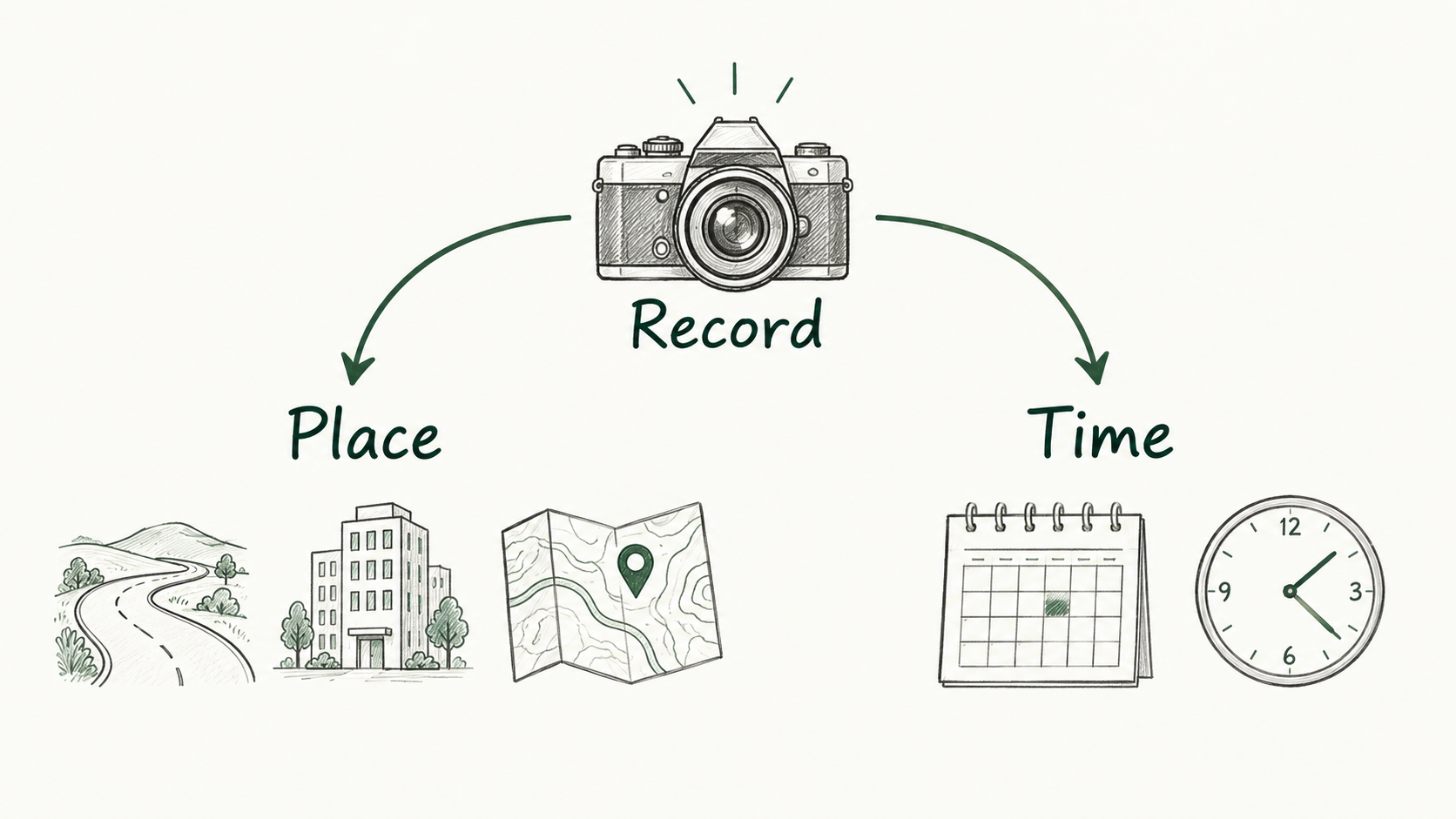 Enlarge ↗
Read as text
- Place → road + building + map
- Time → date + clock + context
Same terms in both languages
Keep these words
- Geolocation
- Finding or estimating where an image was made.
- Chronolocation
- Finding or estimating when an image was made.
- UTC
- A shared time reference.
- Clock drift
- A clock slowly gaining or losing time.
- Transcription / Translation
- Speech to text / one language to another.
A small example
Let’s do it together
A photo was posted at 14:00. A wall clock shows 11:00. These two facts alone do not give the capture time.
Compare the road and building layout with a map.
Put capture, upload and collection times on separate lines.
Use shadows or weather as extra clues. Do not write an uncertain date as certain.
From my research notes · Real record
Beirut: three dates for one photo
A page date is easy to see. But it is not always the photo date. Here I keep the dates on separate lines.
ISS063-E-67994
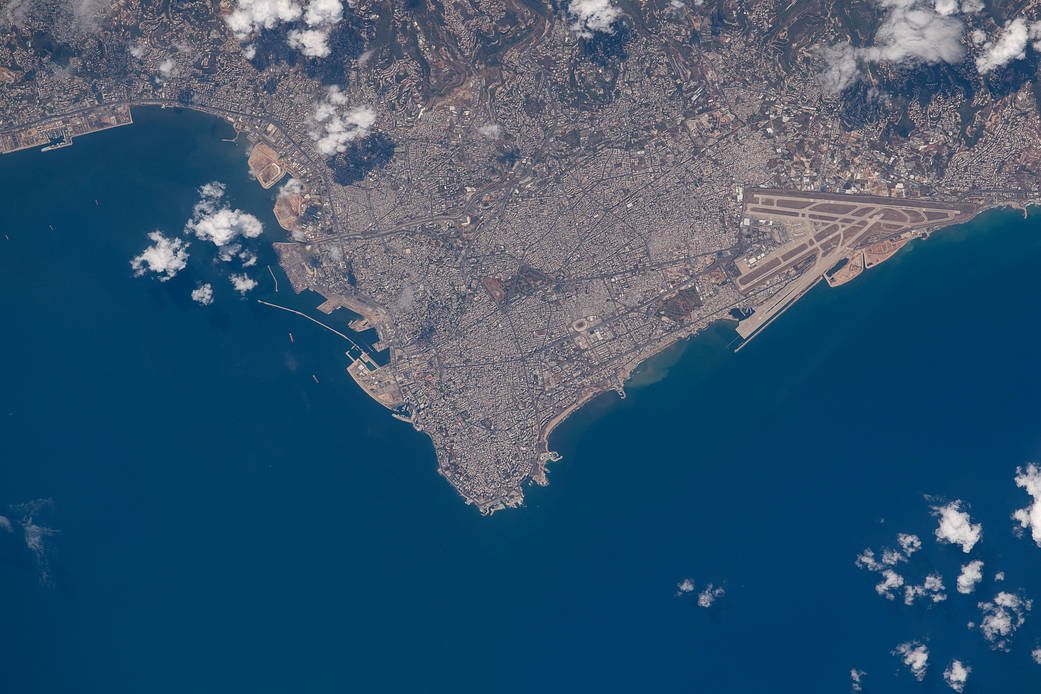
Read the record
- Taken: 11 August 2020. NASA gives this in the photo description.
- Published: 12 August 2020. This is the page date.
- Local save: 15 September 2026. This is when we saved the source file.
What I can write
I write the photo date and page date separately. I add the save date to my source note.
Where I stop
This photo gives place context. It does not show the blast moment or damage to each building.
These are existing public records. The images are resized for reading; no new image detail was generated.
Close the notes. Think first.
Your turn
Whisper writes ‘open’ in a transcript. Can you quote it straight away?
Read the explanation
Listen first. Words such as ‘not open’ may be missed. Check the key word and its context.
Reading record
Only on this browser. These marks are not test results.Sources
I used my study notes and wrote new practice examples. The source PDF is not distributed here.
About the sources and rights