
Finish the work
Chapter 18 / 18
Write what you know
The reader looks for the answer first. Show its evidence and limits too.
Short answer, clear evidence
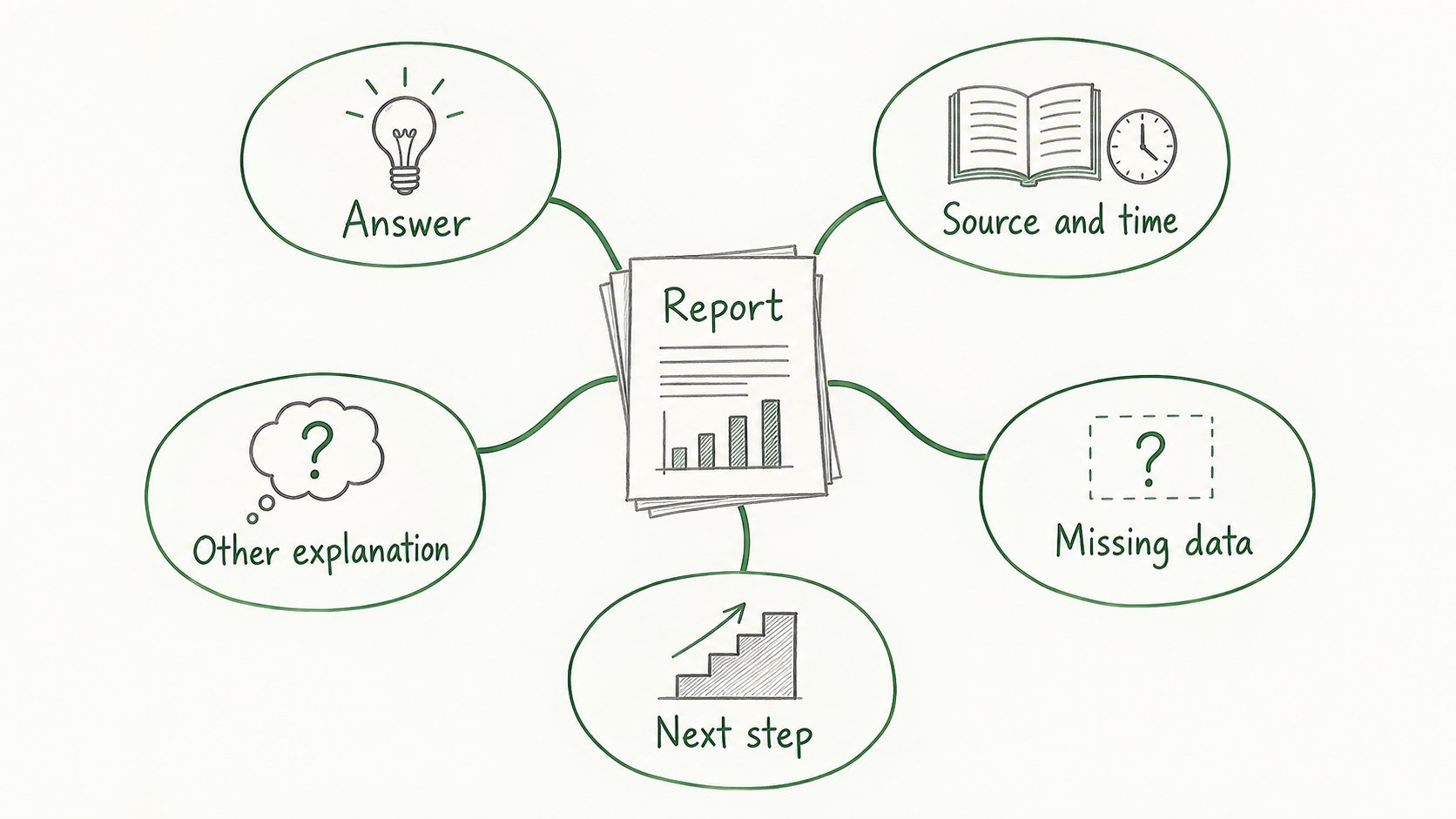
The Liman report may start: ‘Today’s notice says closed for Sunday.’ Add the source and date. State ‘I did not check the door in person’. Confidence is about evidence strength. Impact is about how much a wrong outcome may matter. Keep them separate.
Read the question word
For FIRST or NEXT, check what is already done. BEST asks what fits this case best. MOST likely is not certainty. LEAST asks for the weakest fit. NOT and EXCEPT ask what does not fit. These words guide reading; they are not memorised answer rules.
Final page check
 Enlarge ↗
Read as text
- Answer
- Source and time
- Other explanation
- Missing data
- Next step
Same terms in both languages
Keep these words
- BLUF
- Bottom Line Up Front: give the main answer first.
- Key judgment
- The main supported conclusion.
- Confidence / Impact
- Strength of support / possible effect.
- FIRST / NEXT
- The first / next step needed now.
- NOT / EXCEPT
- Look for the item that does not fit.
A small example
Let’s do it together
Final task: write a three-line library report. Include one observation, one gap and one next check.
Observation: ‘The dated notice says closed for 20 September.’ Add the source.
Limit: ‘No in-person check was made.’ Do not hide a check that was not done.
Next step: ‘Check the current official notice again before travelling.’
From my research notes · Real record
Beirut: write only what the map supports
Red draws the eye. It is easy to write a strong claim at once. First I read what the colour means.
ARIA / EOS · 2020

Read the record
- Observation: the map has coloured cells around the port.
- Source explanation: the colours mark likely damage.
- Limit: one cell does not mean one building.
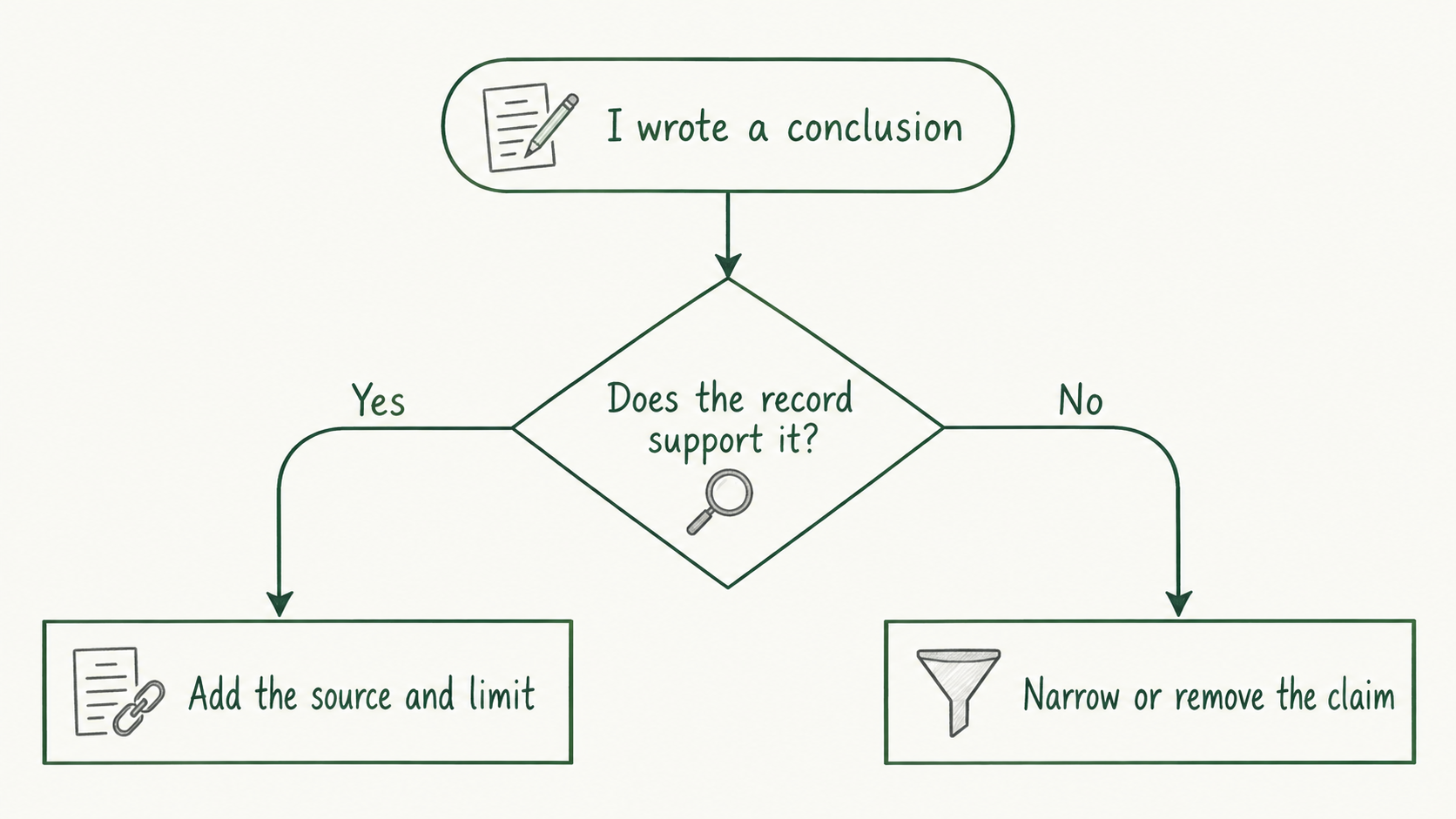
I wrote a conclusion
 Enlarge ↗
Read as text
- Does the record support it?
- Yes: Add the source and limit
- No: Narrow or remove the claim
What I can write
The ARIA/EOS map points to areas of likely damage around the port for closer study.
Where I stop
This map does not give a count of destroyed buildings or say who was responsible. Anger cannot fill that gap. I need separate evidence.
These are existing public records. The images are resized for reading; no new image detail was generated.
Close the notes. Think first.
Your turn
The work is done. Should every piece of data go in the report?
Read the explanation
No. Keep what is needed to answer the question. Reduce personal data. Set who can read it and how long to keep it. Before an exam, also read the current rules in your own GIAC account.
Reading record
Only on this browser. These marks are not test results.Sources
I used my study notes and wrote new practice examples. The source PDF is not distributed here.
About the sources and rights